

What was the ethos you wanted to live by when you founded Palefire Studio?
On a personal level, I wanted creative and professional freedom. I had long desired to start a company of my own. But I wanted the output to be thoughtful (from both a sustainable and intellectual standpoint), inspirational (so to be novel and inventive), enduring (in terms of quality and design) and spirited (with a truly artistic and playful aesthetic).
 What influences your designs?
I often worry that my design influences are wildly far-ranging. An old colleague of mine in the art world once told me my house would be horrible because I love everything. I think what I am most drawn to is the balance of form, function and ornament. Whether it is a heavily decorative Art Nouveau table lamp or Charlotte Perriand’s sculptural bookcases, I am always excited by the intermingling of art and living.
 How can lighting be used to create a narrative or mood in a space?
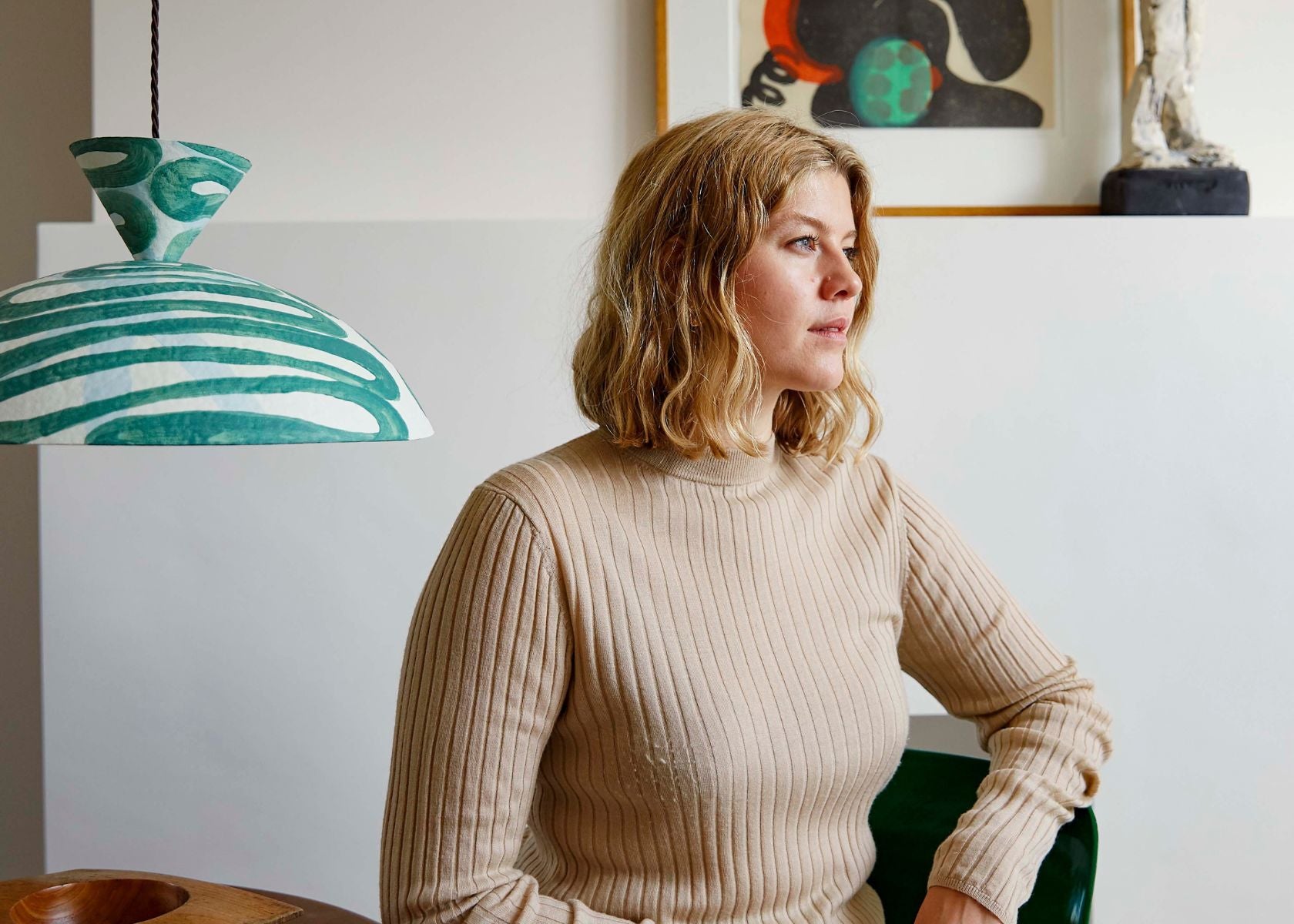
Ideally, different lighting should function like subtle layers in your space. You don’t want it coming all at once from one direction, giving everything away immediately. I prefer patches of light that perform a function or highlight a corner of a room. I therefore tend to hang ceiling lights quite low over a surface to make them more atmospheric, for instance, our Bell pendants are great in groups over a dining table.
Then I use a mixture of uplighters and shaded downlighters at different heights to create vignettes in the rest of the space. Don’t be afraid to use something in an unexpected spot – my mother-in-law has one of our Parasol table lamps on her kitchen island to great effect. Finally, wherever you can have your lights on a dimmer so you can control the ambience.
 Do you have any tips when lighting art?
Having worked in commercial galleries I’m quite particular about this. I would avoid trying to light artworks on the wall unless you can afford a specialist system or picture light (I can’t!). Instead, I would advise paying for non-reflective glass in your picture frames so that what light is in the space has less impact on your enjoyment of the piece. A sculpture, object or ceramic on the other hand can really benefit from sitting under a spotlight or in the beam of a table lamp.
 Can you tell us a bit about your personal art collection and how does it interact with your lighting?
It feels quite grand calling it a collection but it is very personal and reflects different moments in my life. Many of the most treasured pieces were gifts from family and friends – a wedding present from Partnership Editions by Jonathan Schofield, a carved relief by Clark Broadwood Smith from my daughter’s godfather and a photograph by Tess Denman-Cleaver gifted by the artist. I have several pieces from my time working at The Fine Art Society including an abstract work on canvas by the textile designer Alistair Morton which was bought from me by my husband’s late stepfather and is now in our possession.
From Tobias Vernon at 8 Holland Street I was given a gorgeous Robert Adams print that I had been coveting for years as a leaving present. I have also collected, swapped and begged pieces by artists and designers I am close with or have worked with over the years including painter Francesca Mollett, sculptor Alex Errington, ceramicist Nicola Tassie and textile artist Catarina Riccabona. Any gaps on the wall have been filled with cover art from The White Review, my husband’s old art and literature journal, or my own poor attempts.
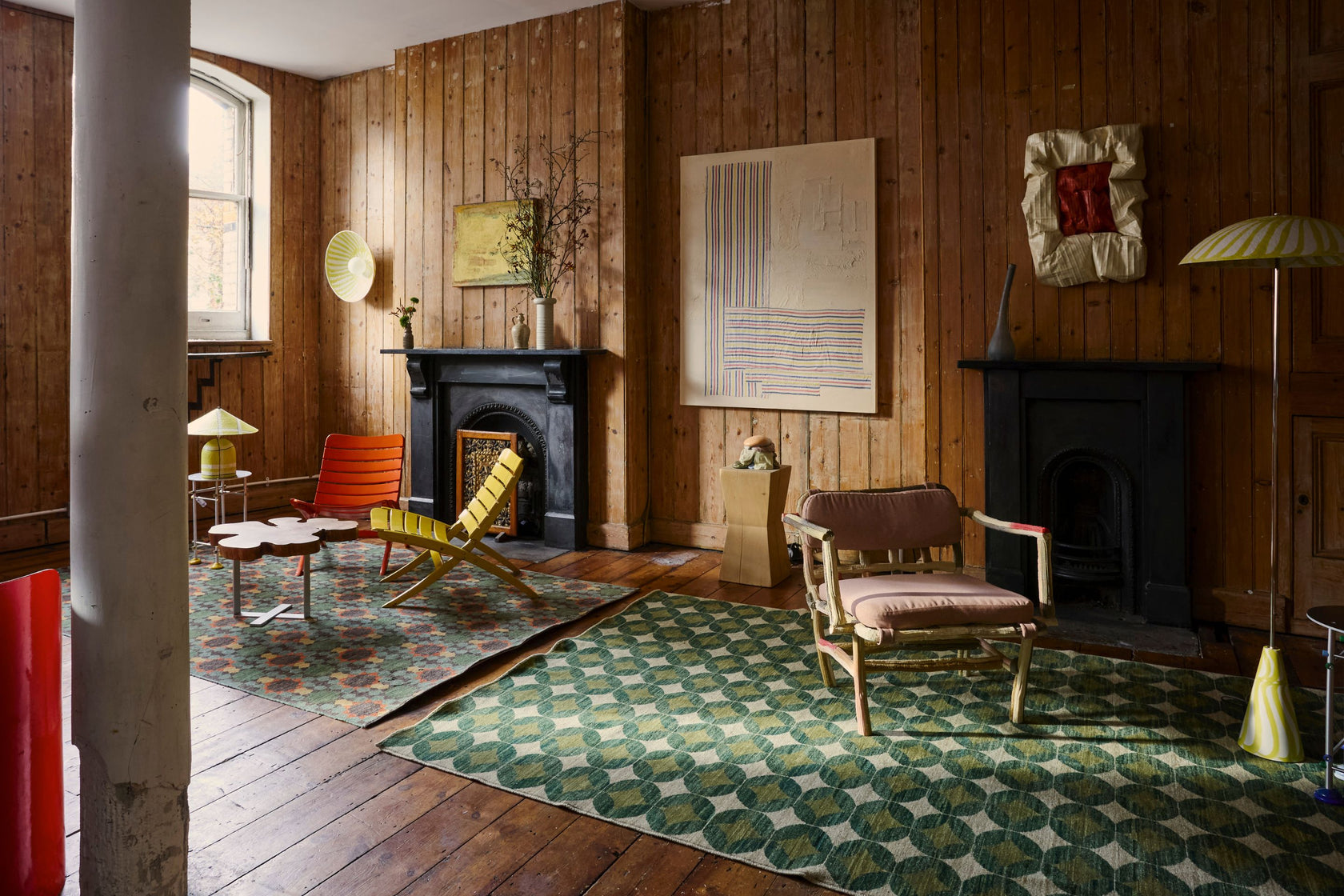
As mentioned above, I don’t light the artwork specifically. Instead in my house artwork and lighting jostle for space, both are equally important. There is no hierarchy (a principle learned at both The Fine Art Society and 8 Holland Street) so on a single shelf a Palefire Hourglass lamp sits alongside an artwork picked up at a local open studio, a leaning coffee table book, a ceramic head and a collection of pebbles from a distant holiday.
 What’s an underrated lighting type you wish people used more?
Uplighters! I don’t think people understand how to use them but they are essential to creating a varied light scheme. I love using our Diabolo uplighters on bookshelves, they look like mini sculptures. They are great for creating atmosphere in dark corners, use them on a low shelf or even the floor. I have a Palefire Satellite in Celadon Citrine on a bench in our dining room next to our banquette, which makes for a loungey, 70s vibe with a zing of acid colour from the bright yellow shade interior.
 What would your dream project be?
I am in the mood for experimenting at the moment, so would be incredibly happy developing new custom patterns or interesting configurations for bespoke orders and special projects. It’s always a pleasure working with clients to facilitate their vision, and we aim to be as flexible as possible, whether that means incorporating someone’s colour scheme, working on different fixtures to create larger lights or completely inventing a pattern.
In the same vein collaborations, like the one we did with 8 Holland Street, are an excellent opportunity to be more playful and think outside the box. I am currently on the lookout for the right partner to offer limited edition lamps that are even more complex and painterly, as a chance to indulge my purely artistic sensibility.
 FOLLOW PALEFIRE STUDIO